To celebrate the Coronation of Britain’s newest monarch, Charles III, this blog takes a look back on all the Kings and Queens of England since William I conquered the throne in 1066. Although there were 20 Kings before William I, this blog starts here as he is regarded by many historians as the first official King of England.
Norman Kings

William I (1066 – 1087) – William the Conqueror defeated Harold II at the Battle of Hastings in 1066 to take the throne and become William I, the first of the Norman kings. In 1085 he commissioned the Domesday Survey, which recorded the whole of England, thus making him what many consider as the first king of England. William died after falling from his horse will battling for the French city of Nantes.
William II (1087 – 1100) – Little is known about William II, other than that he was not a popular king. Son of William the Conqueror, his reign was short lived when he was killed in the New Forest by a stray arrow whilst out hunting. It is claimed by some that this shot may have been deliberate, on instructions by his younger brother Henry.


Henry I (1100 – 1135) – The youngest son of William the Conqueror, Henry I was also known as the ‘Lion of Justice’ because of the good laws he gave to England (even if the punishments were severe!) After his two sons drowned on a voyage, he made his daughter, Matilda, his successor. Matilda married Geoffrey Plantagenet, however never got the chance to take the throne, as on her father’s death, the Council decided a woman unfit to rule the country and offered the throne to a grandson of William the Conqueror, Stephen.
Stephen (1135 – 1154) – Perhaps one of the weakest kings of England, Stephen’s reign was littered with constant raids by the Scottish and Welsh, Norman barons holding far too much power, frequent town lootings, and a decade of Civil War. Known as The Anarchy, in 1139, Matilda, the rightful heir to the throne, invaded England to try to regain the throne. Compromise was eventually reached when it was agreed that Matilda’s son, Henry Plantagenet, would succeed to the throne when Stephen died.

Plantagenet Kings

Henry II (1154 – 1189) – The first of the Plantagenet kings, Henry achieved many great things during his reign, such as ruling most of France through conquering the lands, laying the foundation of the English Jury System, and raising taxes from landholders. However he is most well known for his dispute with Thomas Becket, and Becket’s subsequent murder in Canterbury Cathedral in 1170.
Richard (1189 – 1199) – On the death of Henry II, his third son Richard succeeded to the throne. Known as Richard the Lionheart, he spent very little of his reign in England, instead putting rebellions down in France and leading the Third Crusade. On his way back to his nation, he was captured, and the ransom demanded nearly bankrupt England. He left behind no children when he died from an arrow wound during battle.


John (1199 – 1216) – The fourth son of Henry II, he was far different from his predecessor and brother. Short, fat, and angry are among the best ways to describe John Lackland. Considered cruel and selfish, he was most hated for raising taxes against all parts of society, and was eventually forced to sign the Magna Carta, which reinstated the rights of the people. It is not surprising, therefore, that he has been deemed by many the “worst English king”.
Henry III (1216 – 1272) – Henry was just 9 years old when he succeeded to the throne, on the death of his father. During his reign the first House of Commons was formed, however not on the insistence of Henry. Rather, after capture during a rebellion in 1264, Henry was forced by the barons of England to set up a ‘Parliament’ at Westminster.


Edward I (1272 – 1307) – Taking on what had already been started in his father’s reign, Edward formed the Model parliament in 1295, bringing the knights, clergy, and nobility together with the Commons for the first time. Wanting to unite Britain, he defeated the Welsh chieftains and made his eldest son Prince of Wales. He died on his way to fight Robert Bruce, and attempt to bring Scotland under the united Britain.
Edward II (1307 – deposed 1327) – Another weak king, when Edward took the throne on his father’s death, he ruled for just 20 years, during which he was ruthlessly beaten by the Scottish at the Battle of Bannockburn in 1314. Deposed by his own wife and her lover, he was held captive in Berkeley Castle in Gloucestershire before the orders were given to have him murdered.


Edward III (1327 – 1377) – Son of Edward II, it was Edward III who threw England into the Hundred Years War, all because of his ambition to take possession of Scotland and France. It was also during his reign that the ‘Black Death’ outbreak occurred (1348-1350), killing half the population in England.
Richard II (1377 – deposed 1399) – The second king to be deposed thus far, Richard, son of Edward III, was another king known for his unfairness and his extravagance. He was first tried to be ousted in 1381, in what is known as the Peasants Revolt, led by Wat Tyler. Richard brutally put down the revolt. When his wife, Anne of Bohemia, died suddenly, Richard’s extravagance and tyranny got even worse, until Henry of Lancaster returned from exile and deposed Richard in 1399.

House of Lancaster

Henry IV (1399 – 1413) – Son of John of Gaunt (third son of Edward III, brother of Richard II), Henry returned from exile to reclaim his estates which had been seized by Richard II. He was accepted as king by Parliament, however not by the people. He spent most of his short reign defending himself against plots, rebellions and assassination attempts.
Henry V (1413 – 1422) – A good soldier, Henry learnt his skills putting down the many rebellions launched against his father. He renewed the war against France in 1415, most notably beating the French army at the Battle of Agincourt. On his second expedition to France he was recognised as the next king of France, however he died before he could succeed the throne, leaving his 10-month old son the heir to the English crown.
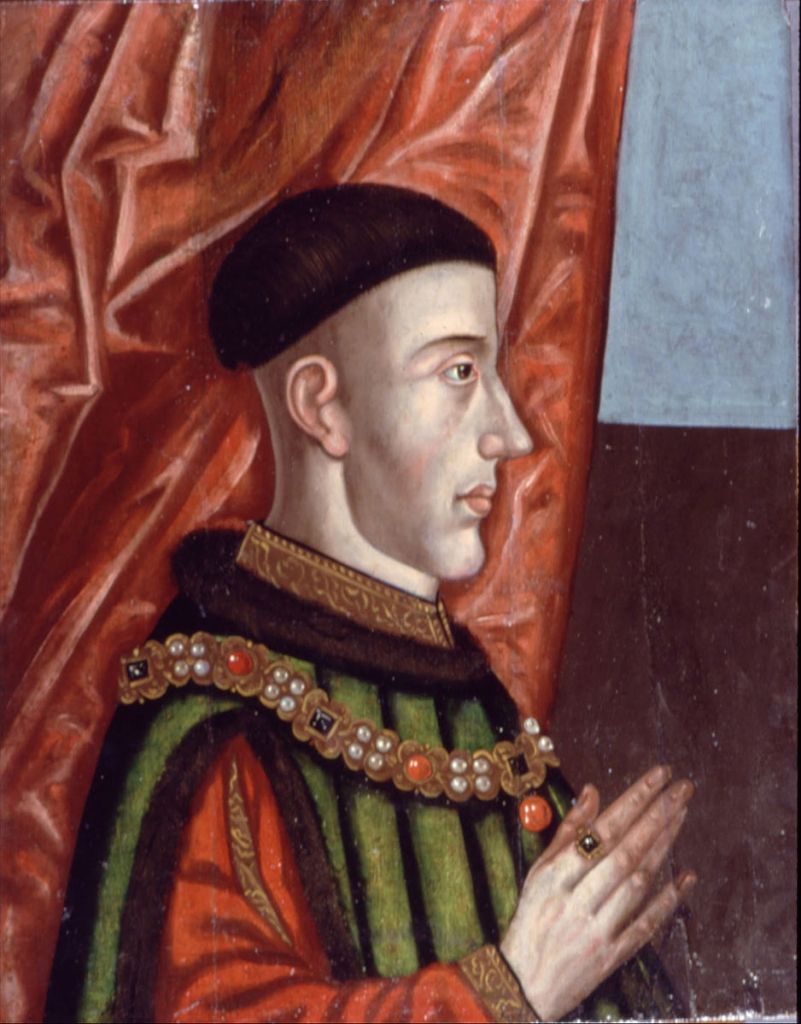

Henry VI (1422 – deposed 1461) – It was during Henry VI’s reign that the Hundred Years War finally ended, in 1453, with the English losing all French lands except Calais. Richard, Duke of York, was made Protector of the Realm in 1454, after Henry’s mental health declined. The House of York challenged Henry’s right to the throne and the country with driven to another civil war. While Henry was briefly restored to the throne in 1470, his only son, Edward, was killed at the Battle of Tewkesbury in 1471, and Henry himself was murdered within the Tower of London the very next day.
House of York
Edward IV (1461 – 1583) – The son of Richard, Duke of York, Edward way yet another unpopular king. Lacking in morals, it is said he had many mistresses and at least one illegitimate son. He died suddenly, leaving two sons and five daughters.


Edward V (1483 – 1483) – Officially the shortest reigning monarch in English history, Edward V took the throne at the age of 13, reigning only two months before he and his brother, Richard, were murdered in the Tower of London by order of one of their uncles, Richard, Duke of Gloucester. Richard declared the princes illegitimate and claimed the throne as what he believed as rightfully his.
Richard III (1483 – 1485) – The brother of Edward IV, Richard III’s reign is remembered as ruthless, not just for the murders of the princes, but of all those who opposed him. His reign was short, with the return of Henry Richmond, a descendant of John of Gaunt, gathering forces and march to the famous Battle of Bosworth Field. Richard was defeated and killed in this battle, ending the Wars of the Roses.

The Tudors

Henry VII (1485 – 1509) – With the killing of Richard III at Bosworth, his crown was passed to Henry Tudor. Having a good claim to the throne, as the son of Henry V, he married Elizabeth of York and united the two battling houses. Throughout his reign there was never a time of security, constantly seeing off threats from foreign powers and people claiming the throne was rightfully theirs.
Henry VIII (1509 – 1547) – On the death of his father, Henry VIII succeeded the throne. Known best for his six wives (who be divorced, beheaded, died after childbirth, divorced, beheaded, and the final survived past his death), his reign was full of political, religious and social upheaval, notably the split from Rome and declaration of Henry as the head of the Church of England.


Edward VI (1547 – 1553) – The only legitimate son to be born to Henry VIII (with his third wife, Jane Seymour), Edward was always a sickly boy who suffered from what is now considered to have been tuberculosis. Succeeding to the throne at age 9, the country was ruled by the Council of Regency, under his uncle Duke of Somerset. Edward died early, leaving behind him dispute over his successor.
Lady Jane Grey (1553 – 1553) – There is some dispute as to whether Lady Jane Grey should be included. If she is, the title of shortest reigning monarch should be taken from Edward V and give to Jane. The cousin of Edward VI, as a protestant she was named next in line to the throne over Edward’s sister Mary, a Catholic. She was proclaimed Queen, however Mary entered London with her supporters and Jane was sent to the Tower of London. She reigned just 9 days before being executed, aged 17.


Mary I (1553 – 1558) – Daughter of Henry VIII and Catherine of Aragon (Henry’s first wife), Mary was a devout Catholic, and the first Queen of England. Known as Bloody Mary, she attempted to revert England back to Catholicism, which was enforced with the upmost ferocity. She burnt those at the stake who failed to denounce their Protestantism.
Elizabeth I (1558 – 1603) – On the death of her sister, Elizabeth, second daughter of Henry VIII (with his second wife, Anne Boleyn), succeeded to the throne. A highly popular monarch, she reverted the country once again to Protestantism and was popular with the people. The only mark on her otherwise ‘Golden Age’ reign was her supposed ordering of the execution of Mary, Queen of Scots, in 1587.

The Stuarts

James I (1603 – 1625) – Also James VI of Scotland, and son of Mary Queen of Scots, James I was the first monarch to rule over both England and Scotland. During his reign the infamous Gunpowder Plot was hatched, with Guy Fawkes and his co-conspirators being captured trying to blow up the Houses of Parliament in 1605.
Charles I (1625 – 1649) – The son of James, Charles faced difficulties with his Parliament from the beginning of his reign, eventually leading to the English Civil War beginning in 1642. The war lasted 4 years, and following the defeat of Charles’ forces by Oliver Cromwell, he was imprisoned, tried for treason in front of the House of Commons, found guilty and condemned to death. Following his death, the monarchy in Britain was abolished, replaced with a republic called the Commonwealth of England. Cromwell became Lord Protector from 1653, until his death in 1658.


Charles II (1660 – 1685) – Following the resignation of Richard Cromwell, Oliver Cromwell’s son, and the second Lord Protector of England, Scotland and Ireland, Charles II re-established the English throne. The son of Charles I, he was known as the Merry Monarch, he was asked to take the crown by the Army and Parliament after the country fell apart during Richard Cromwell’s leadership. His reign was marked with many mistresses, many illegitimate children, the Great Plague from 1665 and the Great Fire of London in 1666.
James II (1685 – fled 1688) – Also James VII of Scotland, and the second son of Charles I, had been exiled from England following the Civil War. On his return and succession to the throne he was quickly hated by the people, and following the Monmouth uprising, led by one of Charles II’s illegitimate sons, in 1685, Parliament asked William of Orange to take the throne. James fled to France where he died in exile in 1701.


William III (1689 – 1702) and Mary II (1689 – 1694) –William of Orange, sailed into Torbay harbour in 1688, never stopped by the Royal Navy. Gathering support as he marched to London in what is known as the ‘Glorious Revolution,’ William took the throne in 1689, reigning jointly with his wife, and James II’ daughter, Mary, until her death in 1694.
Anne (1702 – 1714) – The second daughter of James II, Anne took the throne on the death of William. It was during Anne’s reign that the United Kingdom of Great Britain was created, by the union of England and Scotland. Although Anne had 17 pregnancies, unfortunately only one child survived, William, who died of smallpox aged 11.

The Hanoverians

George I (1714 – 1727) – Leaving no heirs on her death, Anne was succeeded by James I’s great-grandson, George. The German born king arrived in England only able to speak a few words of English, leaving the running of the country largely to the government. During his reign the first Prime Minister was elected, Robert Walpole, in 1721. Another uprising, this time by the Jacobites, attempted to remove George from the throne, but the attempt failed.
George II (1727 – 1760) – The only son of George I, George II similarly relied on Walpole to run the country on his behalf. The Jacobites made a second attempt to remove the Hanoverian from the throne, in hope of placing a Stuart, Charles Stuart, on the throne, but the attempt once again failed.


George III (1760 – 1820) – The English born and English-speaking Hanoverian monarch, and the grandson of George II, George III’s reign was overall one of peace. Suffering from mental illness towards the end of his reign, his son ruled as Prince Regent from 1811 until his death.
George IV (1820 – 1830) – Officially becoming king, having ruled in his father’s place since 1811, George IV was known as the ‘First Gentleman of Europe.’ Ironically, however, his private life was messy, with two marriages, one in secret! His death was greeted with relief by the country, as he was considered a ridiculous king.


William IV (1830 – 1837) – Leaving no heirs on his death, George was succeeded by his brother William. After the death of George’s daughter, Charlotte, William had to marry in order to secure his succession. Loved by the people for his lack of pretentiousness, his time on the throne is most notable by the abolition of slavery in the British colonies in 1833.
Victoria (1837 – 1901) – The longest reigning monarch up to this point, Victoria took the throne unliked by the people. The daughter of the fourth son of George III, she married Albert of Saxe-Coburg, her cousin, in 1840, who virtually ran the country until his death in 1861. During his life he created two lasting impressions, the Christmas Tree, and the Great exhibition of 1851. After his death Victoria withdrew from life until her Golden Jubilee in 1887. During her reign British world power reached its highest point.

House of Saxe-Coburg and Gotha / Windsor

Edward VII (1901 – 1910) – Starting the Edwardian era, Edward VII, son of Victoria and Albert, was a much loved king. Also having many mistresses, Queen Alexandra, his wife, is said to have brought Edward’s current mistress, Mrs Keppel, to his bedside in order for her to say goodbye!
George V (1910 – 1936) – Originally not intended to succeed the throne, on the death of his elder brother, Albert Victor, in 1892, George became second in line to the throne. His reign was marred with troubles; the First World War in 1914-1918 and the troubles in Ireland which led to the creation of the Irish Free State. However, he was also the first royal to broadcast on Christmas Day, 1932.


Edward VIII (1936 – abdicated 1936) – The most popular Prince of Wales the country has ever seen, Edward’s reign was short lived. However, this time it was not due to death, murder, or being deposed. Rather, it was his choice, choosing to abdicate in order to marry Mrs Wallis Simpson. The marriage to Simpson, a divorcee with two living husbands, was considered unacceptable to the Church, of which Edward was head. Abdicating in favour of his brother, and taking the title the Duke of Windsor, Edward lived out his life abroad, until his death in 1972.
George VI (1936 – 1952) – Similar to his father George V, George VI had not intended to succeed the throne, and his reign too was marred by a terrible event. Starting just three years after his succession, the Second World War tore the country apart between 1939-1945. However, he was very popular with the people, with his reign seeing great social change, including the start of the National Health Service (NHS).


Elizabeth II (1952 – 2022) – Elizabeth II’s reign was nothing if not revolutionary. Becoming the Queen not just of Britain, but of seven Commonwealth countries, her coronation was the first to be televised, her son’s wedding the first royal wedding to be televised and her Christmas speech is televised every year. A much-loved monarch, she reigned with great dignity for 70 years, becoming Britain’s longest serving monarch. Queen Elizabeth II died in September 2022.
Charles III (2022 – ) – Following the death of his beloved mother, Charles III succeeded the throne aged 73, his second wife Camilla becoming Queen Consort. His coronation took place on 6 May 2023, celebrated across the nation.

All information in this blog was collated from the following websites:
Ben Johnson, “Kings and Queens of England & Britain,” Historic UK, last accessed 2 May 2023, https://www.historic-uk.com/HistoryUK/KingsQueensofBritain/
Unknown author, “Kings and Queens from 1066,” The Royal Family, last accessed 2 May 2023, https://www.royal.uk/kings-and-queens-1066
All photos in this blog were collated from the following website, and reproduced with no known copyright restrictions at the time of publication:
Multiple images, Wikimedia Commons, last accessed 2 May 2023, https://commons.wikimedia.org/wiki/Main_Page
 It’s all in the Past...