What is a coronation?
A coronation is an ancient ceremony of crowning a new monarch, which takes place either on the accession of the new monarch, or soon after. A grand celebration, which thousands of important guests are invited to attend, Charles III’s coronation on 6 May was the first coronation of a monarch in the United Kingdom since that of his mother, Queen Elizabeth II, in 1953. To celebrate this historic event, this blog looks at the main parts of the coronation ceremony in Britain, which has remained unchanged for thousands of years.
Where do the coronations take place?
Since the coronation of William I on 25th December 1066, Westminster Abbey has been the coronation church of all British monarchs. In 1245, Henry III rebuilt Westminster Abbey in a Gothic style, however this was not finished until the year of his death. Edward I was the first king to be crowned in the current Westminster Abbey, in 1274.
Only three British monarchs did not have a coronation in Westminster Abbey. Firstly, was Edward V, one of the princes who was murdered in the Tower of London in 1483, then Lady Jane Grey, the nine-day queen in 1554, and finally Edward VIII, who abdicated 11 months into his reign in 1936, before the date set for his coronation.
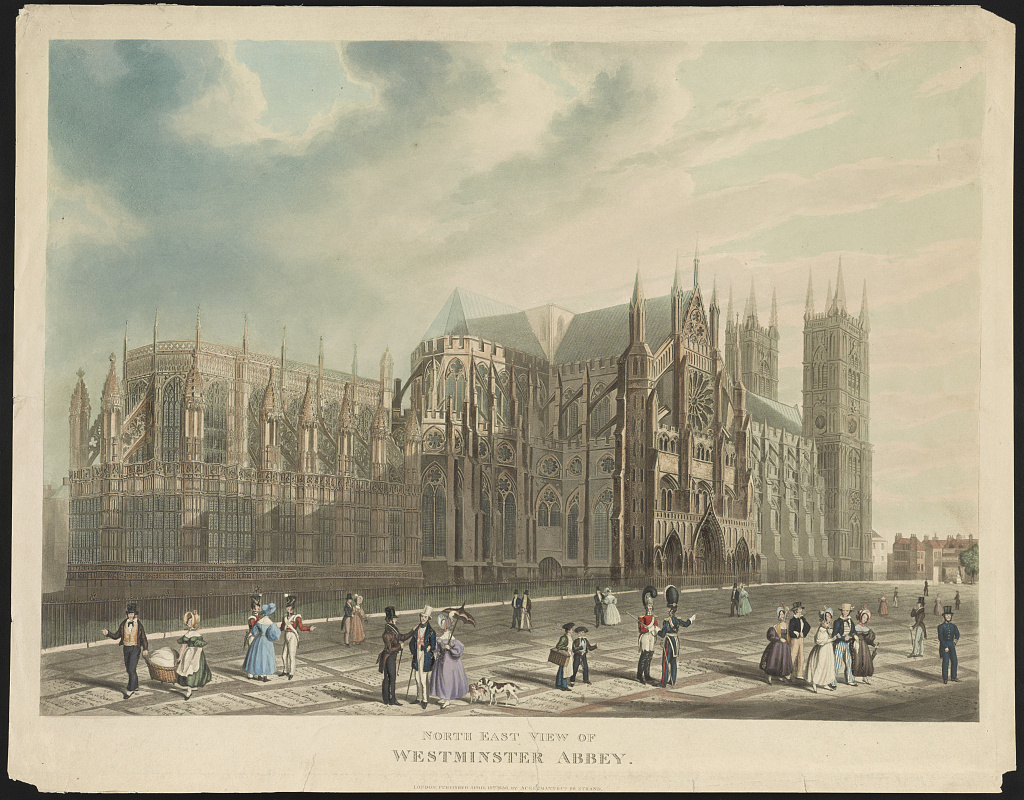
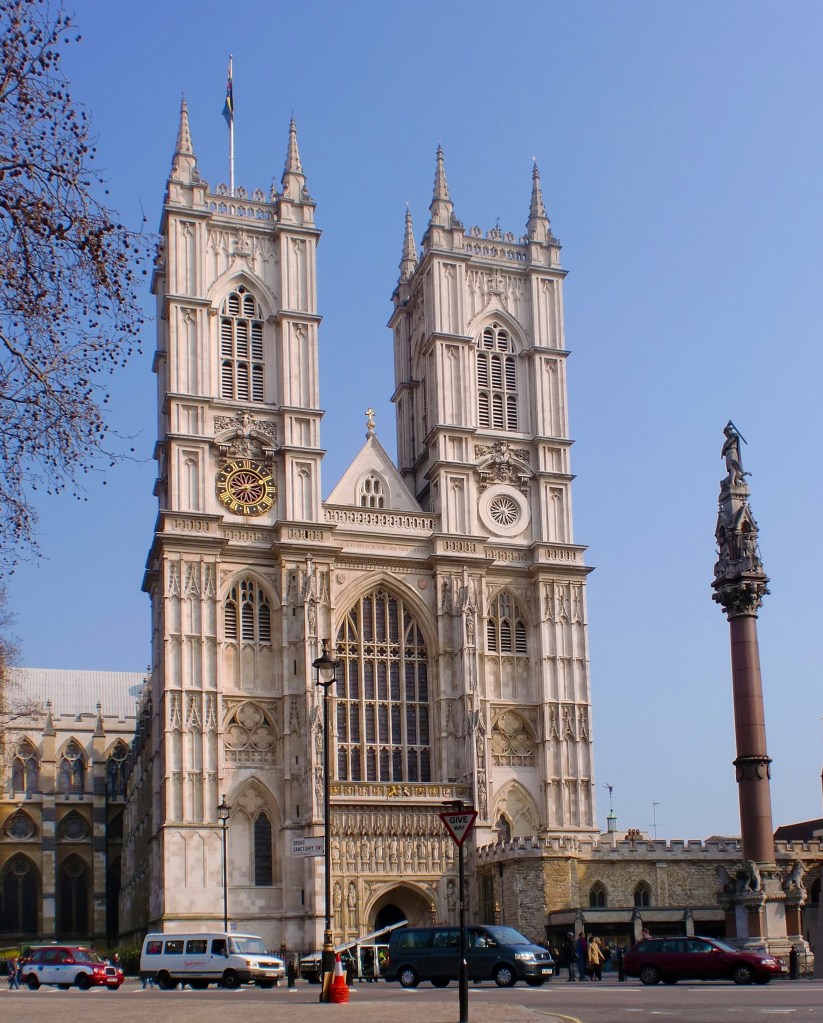
Coronation Order of Service
Since the late 14th century every coronation ceremony has overall followed the same order of service, which is written in the Abbey’s medieval Latin manuscript, the Liber Regalis, which means ‘Royal Book’. At the heart of every British coronation is an Anglican service, conducted by the Archbishop of Canterbury.
The modern coronation service dates from 1902, when King Edward VII was crowned. It starts with a state procession from Buckingham Palace to the Abbey, followed by a procession inside Westminster Abbey. Once the ceremony begins the order is as follows, the Recognition, the Anointing, the Coronation Oath, and the Homage. At the end of the coronation ceremony there is a final procession from the Abbey back to Buckingham Palace.
Previously, the procession to Westminster Abbey started at the Tower of London. A tradition carried out for hundreds of years, the monarch would stay for two nights in the Tower before their coronation. The last coronation procession to begin at the Tower of London was Charles II’s in 1661.
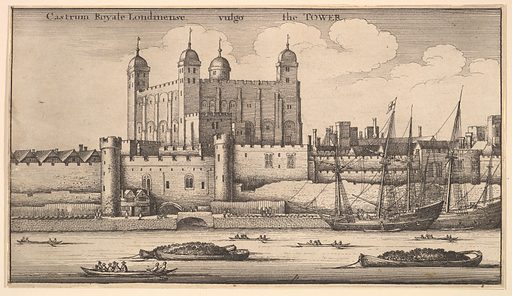
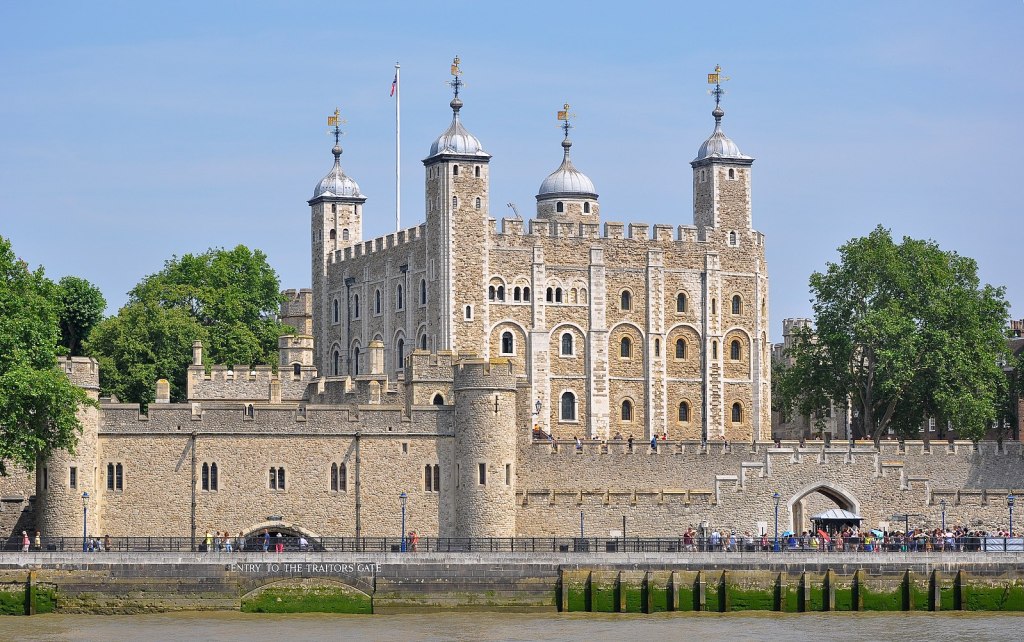
Central to the coronation ceremony is the “unction”. This is the act of anointing a monarch with holy oil and signals the conferment of God’s grace upon a ruler. The United Kingdom is the only European monarchy to retain this ceremony in the present times.
The Coronation Oath, in which the monarch swears to govern the people of the United Kingdom and the Commonwealth is the only aspect of the ceremony which is required by law. The wording of this oath has evolved considerable since the first coronation in the Abbey in 1066, to reflect the changes that have occurred in the UK and the wider Commonwealth, however the basic principle of swearing to govern “according to their respective laws and customs” is still central to the Oath.[1]
The crowning of the monarch
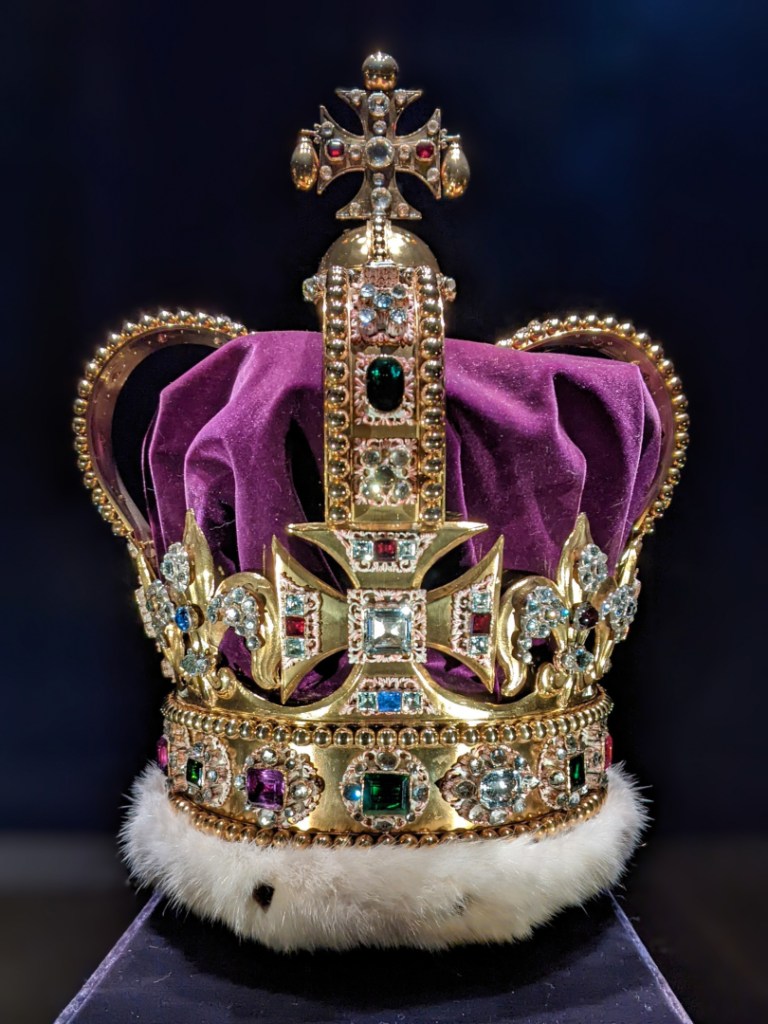
The act of crowning the monarch has taken place in the Coronation Chair since 1308, when it was commissioned by Edward I. The Crown Jewels, which are usually on public display at the Tower of London, are used as part of the service. The monarch is presented with items from the Coronation Regalia, which are sacred objects that represent the monarch’s powers and responsibilities. These include: the spurs and armills, the royal robes, the orb, the ring, a sceptre with a cross and a sceptre with a dove, and finally, and most importantly, St Edward’s Crown.
The St Edward’s Crown which was used in Charles III’s coronation was made to replace the ancient crown used in medieval coronations in the 17th century. This is because during the English Civil War, parliament ordered all the coronation regalia to be brought from Westminster Abbey to the Tower of London and destroyed.
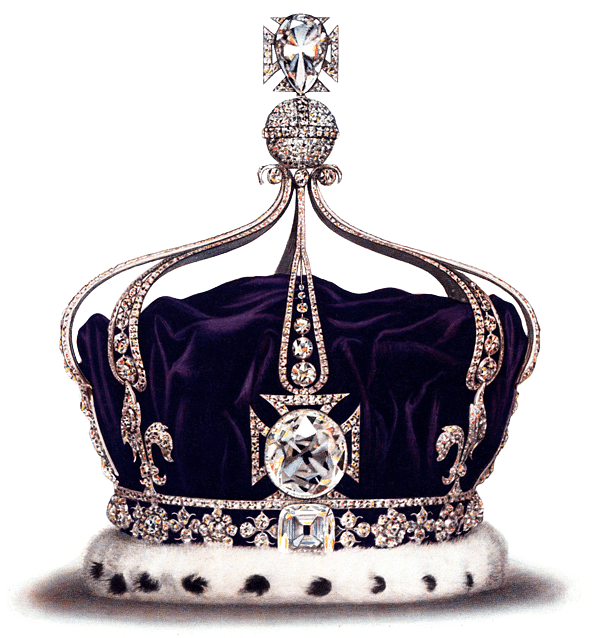
Furthermore, for the first time since 1937, the coronation of Charles III also included the crowning of a Queen Consort. The crowning of a Queen Consort is like the crowning of a monarch but is a simpler ceremony that occurs after the crowning of the king. The Queen Consort is anointed on the head with Holy Oil in a similar way, then invested with Coronation Regalia which includes a ring, sceptre with a cross, sceptre with a dove and finally the Queen Mary’s Crown.
Televised coronation ceremonies in modern day Britain
Broadcasting, firstly on the radio and then later television, has helped “domesticate” the British monarchy, bringing them into people’s homes and giving the “ordinary” people a chance to feel they are participating in important royal events, from the Duke of York’s wedding, which received radio commentary in 1923 to Charles III’s coronation, which was broadcast live on the BBC on 6 May 2023.[2]
Queen Elizabeth II’s coronation was the first coronation to be televised, in 1953, attracting over 20 million viewers. Providing unprecedented access to every detail of the previously unseen coronation ceremony, with coverage from inside Westminster Abbey, all viewers across the world were able to experience what for many was a once-in-a-lifetime event.
[1] House of Commons Library, “The coronation: History and ceremonial,” UK Parliament, last accessed 6 May 2023, https://commonslibrary.parliament.uk/research-briefings/cbp-9412/
[2] Ruth Adams, “A British Coronation in the age of social media,” King’s College London, last accessed 6 May 2023, https://www.kcl.ac.uk/british-coronation-in-the-age-of-social-media
[Image 1] “North east view of Westminster Abbey,” Library of Congress, last accessed 6 May 2023, https://www.loc.gov/item/2014645168/
[Image 2] “Westminster Abbey St Peter,” Wikimedia Commons, last accessed 6 May 2023, https://commons.wikimedia.org/wiki/File:Westminster_Abbey_St_Peter.jpg
[Image 3] “Tower of London,” Look and Learn – History Picture Archive, last accessed 6 May 2023, https://www.lookandlearn.com/history-images/YM0361561/Tower-of-London
[Image 4] “Tower of London viewed from the River Thames,” Wikimedia Commons, last accessed 6 May 2023, https://commons.wikimedia.org/wiki/File:Tower_of_London_viewed_from_the_River_Thames.jpg
[Image 5] “Saint Edward’s Crown,” Wikimedia Commons, last accessed 6 May 2023, https://commons.wikimedia.org/wiki/File:Saint_Edward%27s_Crown.jpg
[Image 6] “Queen Mary’s Crown,” Wikimedia Commons, last accessed 6 May 2023, https://commons.wikimedia.org/wiki/File:Queen_Mary%27s_Crown.png
All information in this blog was collated from the following websites:
“Coronations at the Abbey – A history of coronations,” Westminster Abbey, last accessed 6 May 2023, https://www.westminster-abbey.org/about-the-abbey/history/coronations-at-the-abbey/a-history-of-coronations
House of Commons Library, “The coronation: History and ceremonial,” UK Parliament, last accessed 6 May 2023, https://commonslibrary.parliament.uk/research-briefings/cbp-9412/
“The Coronation,” The Royal Family, last accessed 6 May 2023, https://www.royal.uk/coronation
Tower of London, “Coronations Past and Present,” Historic Royal Palaces, last accessed 6 May 2023, https://www.hrp.org.uk/tower-of-london/history-and-stories/coronations-past-and-present/#gs.wqsde5
“King Charles III Coronation: A new chapter in British history,” King’s College London, last accessed 6 May 2023, https://www.kcl.ac.uk/king-charles-iii-coronation-a-new-chapter-in-british-history
 It’s all in the Past...